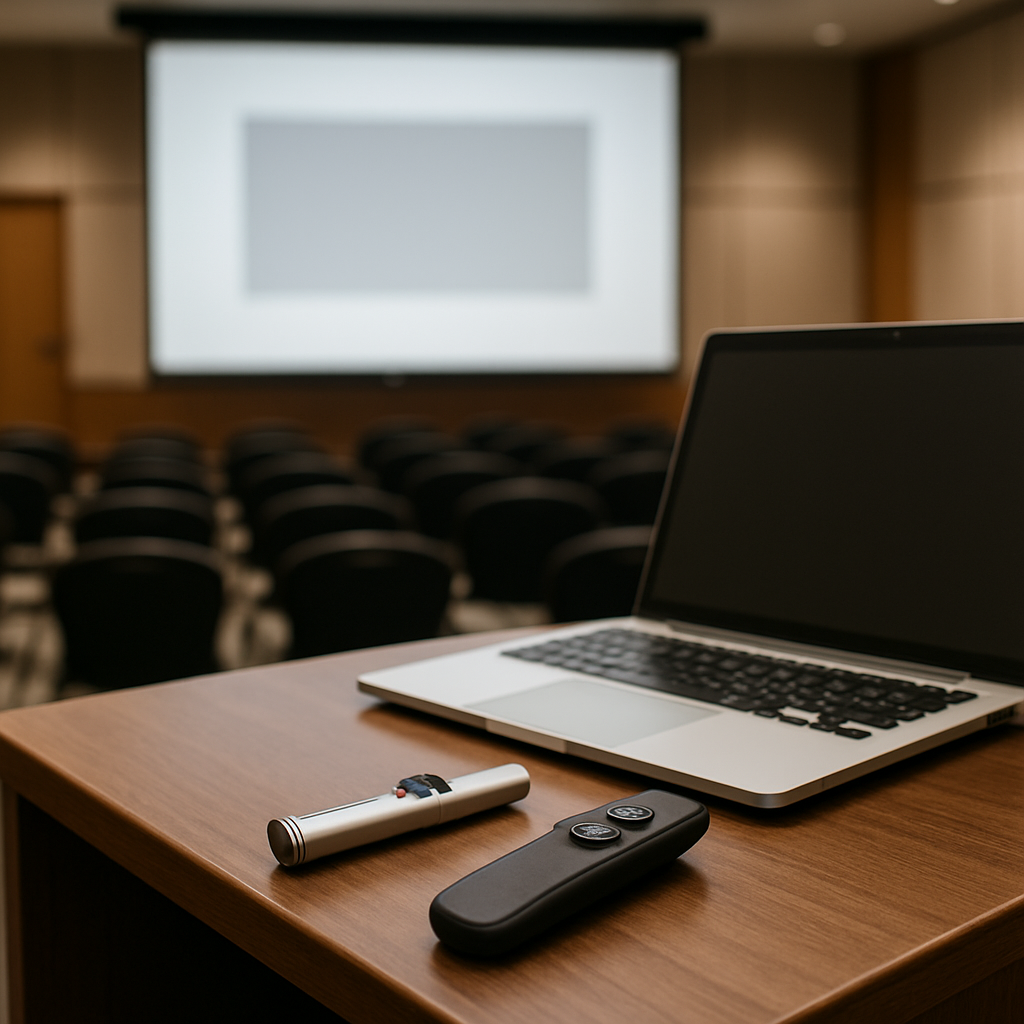
Match the pointer to the screen and room
A presenter remote should make the speaker feel calm, not theatrical. Laser visibility depends on screen type, room brightness, distance, and local venue rules, so the safest pick is the one that fits the places where talks actually happen.
For product-level choices after this setup planning, review the LeStallion guide to 7 Best Laser Pointers and Presentation Remotes.
Keep slide controls simple
Forward, back, blank screen, and start slideshow are more valuable than a crowded remote full of tiny buttons. During a talk, the hand should know what to press without looking down.
Test the remote with the laptop, display, and room before a real presentation.
Plan for walking range
Wireless range matters when the presenter leaves the laptop. A small room needs less range than a hall, but stable connection is still important because one missed click can break the rhythm of a presentation.
Test the remote with the laptop, display, and room before a real presentation.
Check batteries before every session
Rechargeable remotes and replaceable-battery remotes can both work well. The key is predictable power, clear indicators, and a routine that avoids discovering a weak battery while people are waiting.
Test the remote with the laptop, display, and room before a real presentation.
Rehearse with the real room
Different rooms change everything: projector height, screen material, USB access, lectern placement, and audience distance. A quick setup check makes a modest remote feel more reliable.
Test the remote with the laptop, display, and room before a real presentation.
Choose confidence over features
The best presentation remote is the one the speaker trusts. Comfort, grip, clear buttons, and predictable response matter more than a long specification list.
Test the remote with the laptop, display, and room before a real presentation.
Presentation remote field check 1
Use the remote in the same way the speaker will use it under pressure. Hold notes in one hand, walk away from the laptop, turn toward the screen, and move through real slides. This reveals whether the buttons are easy to find, whether the receiver stays connected, and whether the pointer is visible without becoming distracting.
Also test the awkward parts of a presentation. Start from the first slide, go backward, blank the screen if supported, recover from sleep mode, and reconnect after unplugging the receiver. A remote that handles these small moments quietly is more useful than one with a long feature list.
For shared offices, label the receiver and store it with the remote. Many presentation problems are not caused by the remote itself; they happen because the tiny USB receiver is left in another laptop bag.
Presentation remote field check 2
Use the remote in the same way the speaker will use it under pressure. Hold notes in one hand, walk away from the laptop, turn toward the screen, and move through real slides. This reveals whether the buttons are easy to find, whether the receiver stays connected, and whether the pointer is visible without becoming distracting.
Also test the awkward parts of a presentation. Start from the first slide, go backward, blank the screen if supported, recover from sleep mode, and reconnect after unplugging the receiver. A remote that handles these small moments quietly is more useful than one with a long feature list.
For shared offices, label the receiver and store it with the remote. Many presentation problems are not caused by the remote itself; they happen because the tiny USB receiver is left in another laptop bag.
Presentation remote field check 3
Use the remote in the same way the speaker will use it under pressure. Hold notes in one hand, walk away from the laptop, turn toward the screen, and move through real slides. This reveals whether the buttons are easy to find, whether the receiver stays connected, and whether the pointer is visible without becoming distracting.
Also test the awkward parts of a presentation. Start from the first slide, go backward, blank the screen if supported, recover from sleep mode, and reconnect after unplugging the receiver. A remote that handles these small moments quietly is more useful than one with a long feature list.
For shared offices, label the receiver and store it with the remote. Many presentation problems are not caused by the remote itself; they happen because the tiny USB receiver is left in another laptop bag.
How to choose for mixed presentation spaces
Many speakers use the same remote in conference rooms, classrooms, workshops, client offices, and borrowed event spaces. That variety changes the buying decision. A remote that works beautifully in a small meeting room may feel less dependable in a lecture hall if the receiver range is short, the buttons are hard to feel, or the laser is too faint for a bright screen.
Start with the spaces used most often. If the laptop normally sits on a lectern, range can be modest. If the presenter walks between tables or stands near a whiteboard, connection stability and button feel become more important. If the venue uses large displays rather than projector screens, a laser pointer may be less visible and slide control may matter more.
Think about the support kit too. Keep spare batteries, a charging cable, a labeled receiver, and any USB-C adapter together. The remote is only one part of the presentation system, and the smallest missing adapter can stop the whole setup from working smoothly.
What to test before an important talk
Before a real session, test the first slide, a middle slide, the final slide, and any slide with video, animation, or embedded media. Some remotes handle basic slide advance but behave differently when the computer changes focus or a video player takes over. Practicing these moments keeps the speaker from improvising in front of the room.
Also rehearse where the remote will live when the speaker needs both hands. A pocket, lectern edge, or folder clip can all work, but the choice should be deliberate. Dropping a remote or hunting for it during questions interrupts the professional rhythm.
Finally, check the lighting. Laser visibility, screen glare, and audience sight lines are room-specific. A quick walk to the back of the room shows whether the pointer actually helps people follow the presentation.
Deep-dive subpages
Related office equipment page
This guide follows the previous OVH cloud page on business card printers for professional use. When you are ready to compare current picks, use the LeStallion presentation remote roundup.