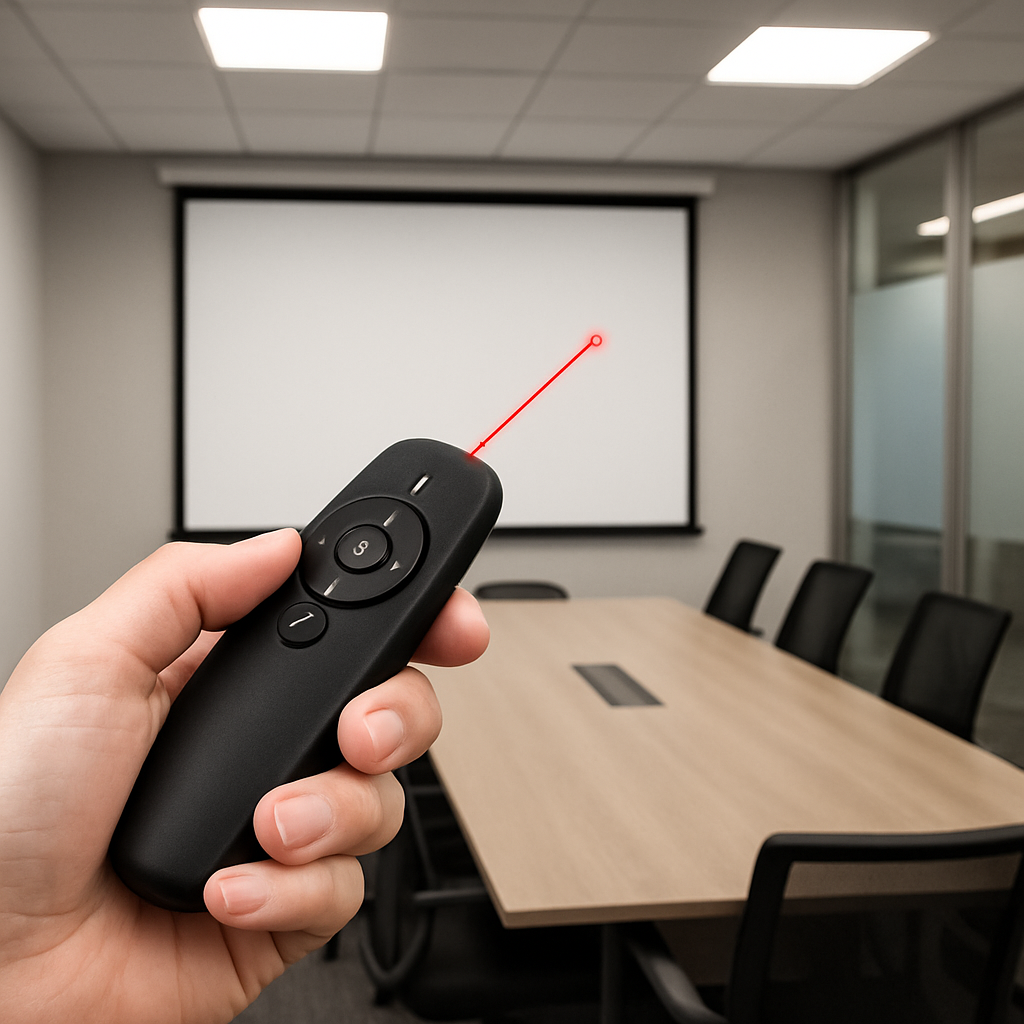
Laser Visibility: buying context
Laser Visibility is one of the details that decides whether a presentation remote feels dependable in a real room. A good remote should support the speaker quietly and avoid creating a new technical worry.
This supporting page is part of the main presentation remote guide. For product picks, compare the LeStallion guide to the best laser pointers and presentation remotes.
Think about the actual presentation setting first: screen type, room brightness, laptop distance, USB access, and how much the presenter moves.
- Simple tactile buttons beat crowded controls.
- Stable range matters more than advertised maximum range.
- Battery routine and receiver storage prevent common failures.
Practical room test 1
Run a five-minute rehearsal with the actual laptop, adapter, display, and slides. The remote should advance cleanly while the presenter faces the audience, turns to the screen, and walks to the farthest expected point. If a click only works when the remote points directly at the computer, the setup may feel fragile during a real talk.
Notice grip and button separation. A remote used in a nervous hand needs tactile landmarks, not tiny identical buttons. The best layout lets the presenter find forward and back by touch while continuing to speak.
Keep a backup path. Know which keyboard key advances the slides and where the receiver is stored. Confidence improves when the presenter knows how to recover from a battery or connection problem.
Practical room test 2
Run a five-minute rehearsal with the actual laptop, adapter, display, and slides. The remote should advance cleanly while the presenter faces the audience, turns to the screen, and walks to the farthest expected point. If a click only works when the remote points directly at the computer, the setup may feel fragile during a real talk.
Notice grip and button separation. A remote used in a nervous hand needs tactile landmarks, not tiny identical buttons. The best layout lets the presenter find forward and back by touch while continuing to speak.
Keep a backup path. Know which keyboard key advances the slides and where the receiver is stored. Confidence improves when the presenter knows how to recover from a battery or connection problem.
Practical room test 3
Run a five-minute rehearsal with the actual laptop, adapter, display, and slides. The remote should advance cleanly while the presenter faces the audience, turns to the screen, and walks to the farthest expected point. If a click only works when the remote points directly at the computer, the setup may feel fragile during a real talk.
Notice grip and button separation. A remote used in a nervous hand needs tactile landmarks, not tiny identical buttons. The best layout lets the presenter find forward and back by touch while continuing to speak.
Keep a backup path. Know which keyboard key advances the slides and where the receiver is stored. Confidence improves when the presenter knows how to recover from a battery or connection problem.
Practical room test 4
Run a five-minute rehearsal with the actual laptop, adapter, display, and slides. The remote should advance cleanly while the presenter faces the audience, turns to the screen, and walks to the farthest expected point. If a click only works when the remote points directly at the computer, the setup may feel fragile during a real talk.
Notice grip and button separation. A remote used in a nervous hand needs tactile landmarks, not tiny identical buttons. The best layout lets the presenter find forward and back by touch while continuing to speak.
Keep a backup path. Know which keyboard key advances the slides and where the receiver is stored. Confidence improves when the presenter knows how to recover from a battery or connection problem.
Compatibility details worth checking
Presentation remotes are simple devices, but compatibility still matters. Check whether the receiver uses USB-A or USB-C, whether the remote needs software, and whether it behaves correctly with the slide app used most often. PowerPoint, Keynote, Google Slides, and PDF viewers can respond differently to the same button.
If multiple people share the remote, choose a design that does not require personal settings or complicated pairing. Shared equipment should be obvious, labeled, and easy to reset before a meeting starts.
For hybrid presentations, consider camera and microphone placement. A speaker may need to stand where the camera sees them clearly, not just where the pointer reaches. The remote should support that positioning without forcing the presenter to hover beside the laptop.
Durability and storage habits
A presentation remote often lives in a laptop bag, drawer, or shared equipment cabinet. That means durability is about more than the shell. The receiver slot, charging port, battery door, and button labels all need to survive repeated handling.
Store the remote in a small pouch with the receiver and adapters. If the remote is rechargeable, add a calendar reminder or charging routine before major events. If it uses replaceable batteries, keep a fresh pair with the kit and remove old batteries during long storage.
Good storage also protects confidence. When the speaker knows the remote is charged, complete, and tested, the device fades into the background and the talk becomes easier to deliver.
Speaker comfort checklist
Speaker comfort is a real buying factor. The remote should fit naturally in the hand, leave the thumb near the forward button, and avoid sharp edges that become noticeable during a long session. If the presenter uses note cards, a microphone, or a water bottle, the remote should still be easy to hold without looking clumsy.
Check how the remote feels when the speaker is nervous. Under pressure, identical buttons are easy to confuse. A raised forward button, clear back button, and separated laser control reduce mistakes. Haptic familiarity can matter more than another feature icon on the package.
For classrooms and training rooms, consider repeat use. A trainer may click hundreds of times in a day. Lightweight comfort, predictable response, and easy battery routines become more important than premium styling.
When a laser pointer is not the priority
Laser pointers can be helpful on projection screens, but they are not always visible on modern displays, livestream cameras, or bright rooms. In those cases, slide control, blank-screen control, and calm navigation may be more valuable than a stronger beam.
If the presentation includes screenshots or complex diagrams, software highlighting, cursor tools, or built-in slide annotations may work better for remote viewers. The physical remote should support the flow, while the slide design does the visual pointing.
Choose the remote around the audience experience. If the audience cannot clearly see the laser, the pointer feature becomes a distraction. If the audience can follow the talk because the speaker moves confidently through the slides, the remote is doing its job.
Final setup note
Store the remote, receiver, charging cable or spare batteries, and any adapter in one labeled pouch. A presentation remote is a small device, but the support kit around it often determines whether the talk starts smoothly.
Before important sessions, test the first slide, last slide, and one embedded media slide. That quick routine catches most compatibility surprises.
Related reading
Return to the main guide, review the LeStallion product shortlist, or visit the previous cloud page on business card printers.